This piece was written by a student at the University of Idaho as part of a collaborative class project exploring the regional Latino history of the Pacific Northwest and, more specifically, Latino culture and history in Spokane County in Washington State.
The history of the Pacific Northwest often focuses on a distinctly “American” narrative defined by westward expansion, white settlement, and the development of an “untouched” frontier. This narrative, however, leaves out much of the region's diverse and complex history and the people who have played a crucial role in shaping it. Spanish and Mexican involvement, including Mexican crewmembers aboard the Malaspina Expedition and later Mexican mulepackers, predates much of the familiar ‘American’ pioneer story that has come to dominate how we remember the region's past. Latino presence and influence are deeply entrenched in the history of Washington State, and long before they became associated with the agricultural regions of central and eastern Washington, people of Latin American origin were exploring, working, and establishing settlements throughout the Pacific Northwest (Guzman, 2006). From Mexican crewmembers aboard early expeditions to mulepackers, agricultural workers, and activists, Latino communities have played a critical role in shaping this region.
This article explores the history of Latinos in the Pacific Northwest and how their legacy carries on today. As stated in an article published by the University of Missouri Cambio Center, the word, "Latino” is a term used to describe people who have Latin American origins, including those from Mexico (North America), Central America, South America, and the Caribbean, while the term “Hispanic” describes people who are Spanish-speaking or of Spanish origin. It is important to note that some Latin Americans do not identify with or have Spanish origin, and thus the terms “Hispanic” and “Latino” are not interchangeable; people of these identities, however, are deeply rooted in the history of the Pacific Northwest and have had profound influence on its modern cultural landscape (Guzman, 2006). While much of the early history discussed in this essay centers on Mexican and Mexican American experiences, these stories represent part of the broader Latino history of Washington and the Pacific Northwest.
Early Exploration
In the late 1700s, Spanish expeditions set out from San Blas, Nayarit, Mexico, to explore and establish a presence in the Pacific Northwest, a region they formally claimed in 1775 (Guzman, 2006). Although these voyages were led by Spanish naval officers, Mexican crewmembers were instrumental to their success and further exploration of Washington State (Guzman, 2006).
José Mariano Mociño and Anastasio Echeverría, both born in Mexico, were members of the Malaspina Expedition, which explored the Pacific Northwest through smaller offshoot expeditions in 1792, including the exploration of Nootka Sound and the Strait of Juan de Fuca (Guzman, 2006). Their involvement provides an early example of Mexican participation in the exploration and documentation of the Pacific Northwest. Rather than simply accompanying these expeditions, Mociño and Echeverría contributed their knowledge and expertise to the region's exploration.
José Mariano Mociño was born in 1757 in Cieneguillas de Gonzalez, Mexico, of Spanish ancestry. Between 1774 and 1789, Mociño remained in Mexico and pursued a rigorous education in philosophy, scholastic theology, ethics, medicine, and botany (Wilson Engstrand, 1983). Mociño earned numerous prestigious academic and professional distinctions, and his knowledge and dedication became vital to various expeditions in North America (Wilson Engstrand, 1983). In the expedition to Nootka Sound, Mociño conducted extensive research on the area’s wildlife, documenting approximately 200 species of plants, animals, and birds (Guzman, 2006). He also documented the culture, economy, and government of the Nootka Indians and offered a unique perspective on Spanish presence in the region (Wilson Engstrand, 1983). He later compiled his observations in Noticias de Nootka: An Account of Nootka Sound, providing valuable documentation of the natural environment and Indigenous communities in the Pacific Northwest (Guzman, 2006).
In the excerpt from Noticias de Nootka: An Account of Nootka Sound in 1792, titled Document 26: Moziño Praises the Nuu-chah-nulth, 1792, which is provided by the University of Washington, Moziño comments on the climate and weather conditions of the area:
“The summer, without doubt, is the best season in Nootka. If the inhabitants would make their plantings on the slopes of the hillsides, the frequent rains would not drown the roots with the rapid downpour of water, nor would the winds scatter the seeds because of the shelter they would have there” (Wilson Engstrand, 1970).
Mocinos's work not only offers a scientific account of the region, but also documents and provides insight into existing Indigenous communities and how Mexican and Spanish explorers came to understand and interact with Nootka Sound and the surrounding areas (Wilson Engstrand, 1970).
Anastasio Echeverría, a renowned Mexican botanical artist and naturalist, also contributed to documentation of the region by creating detailed landscape profiles of Washington State and illustrations of its flora and fauna (Guzman, 2006). Below is an original illustration by Echeverria from the article Mexico's Pioneer Naturalist and the Spanish Enlightenment (see Figures 1 and 2).
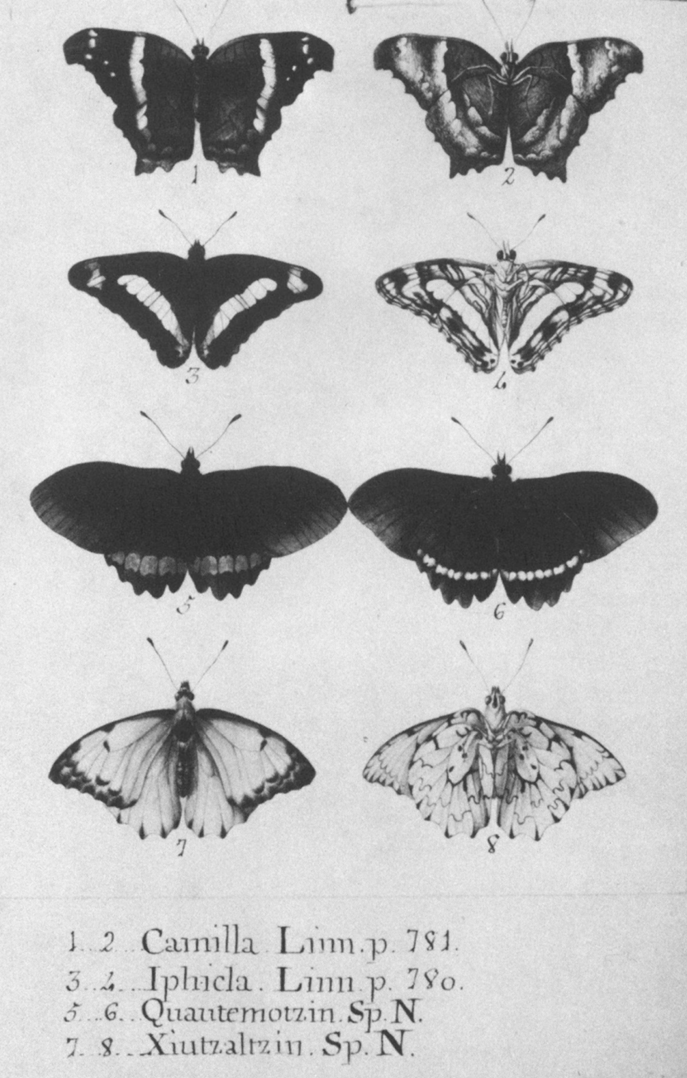
(Figure 1)
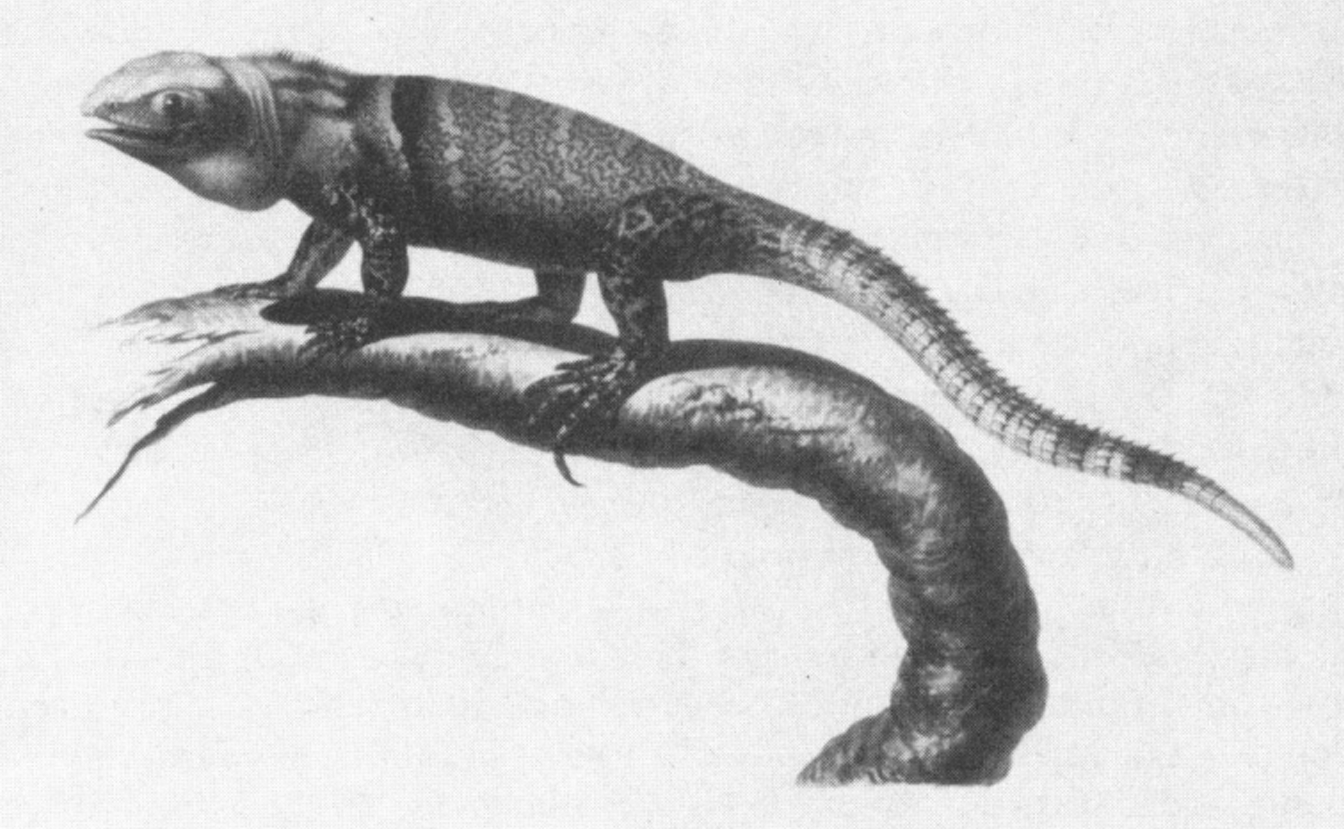
(Figure 2)
These expeditions remind us that people from Mexico made critical contributions to the exploration and development of the Pacific Northwest long before Washington became a state in 1889. Mexican explorers, naturalists, artists, and laborers contributed their knowledge and expertise to exploring and documenting the region, reflecting an early history of Mexican presence and influence in the Pacific Northwest.
Mulepackers
Exploration gave way to settlement, and with this, Latino influence took hold in new ways. By the mid-19th century, the Mexican mulepacking system became a crucial part of the mining industry throughout the West. Mulepackers provided reliable overland transport of supplies and provisions to remote mining camps otherwise inaccessible, while also hauling valuable silver and gold ore to distribution points throughout California, Washington, and Idaho (Guzman, 2006). Their knowledge of mule handling, packing techniques, and long-distance travel made Mexican mulepackers extremely valuable in rugged, unpredictable terrain (Porter, 2025). Their work shows how Latino communities contributed not only labor but also specialized skills and knowledge that supported the growth of mining and local trade. Mulepacking systems not only contributed to the region's growing economy, but also helped to establish a broader alliance and presence of Mexican communities in Washington State and the greater Pacific Northwest.
Mexican Migration and Agriculture
The outbreak of the Mexican Revolution in 1910 influenced Mexican immigration to the U.S. (Guzman, 2006). Meanwhile, the growth of the agricultural and railroad industries in the United States created new employment opportunities, drawing Mexican immigrants and Mexican Americans to Washington and the Pacific Northwest (Guzman, 2006). These opportunities contributed to a growing Mexican and Mexican American (Chicano) presence in the state, particularly in agricultural regions such as the Yakima Valley (Guzman, 2006).
Demand for agricultural labor skyrocketed during World War II, leading to the development of the Bracero Program, established in 1942. According to the Library of Congress, the program resulted from diplomatic agreements between Mexico and the United States that allowed Mexicans to legally work in the United States under short-term labor contracts. They worked alongside Chicano and other migrant laborers to fill labor shortages and support the state's agricultural and railroad industries during the war (Compean). Although Washington State ended its participation in the Bracero Program in 1947, the demand for Mexican and Chicano labor did not. Agricultural work continued to draw workers and families to areas such as the Yakima Valley, contributing to the growth of more established Latino communities throughout Washington (Guzman, 2006).
Although the Bracero Program created legal employment opportunities for Mexicans to work in the U.S., it did not come without a cost. Mexican laborers were subject to poor working conditions, including inadequate housing, lack of food, exposure to poisonous chemicals, and long working hours with little to no rest (Mendoza, 2019). Despite these hardships, Mexican and Mexican American agricultural workers laid the foundation for the organization of farmworkers and activist movements in the decades that followed. Below is a photograph from the Washington State University Digital Collections showing migrant workers at the Dayton FSA camp in Oregon (see Figure 3).
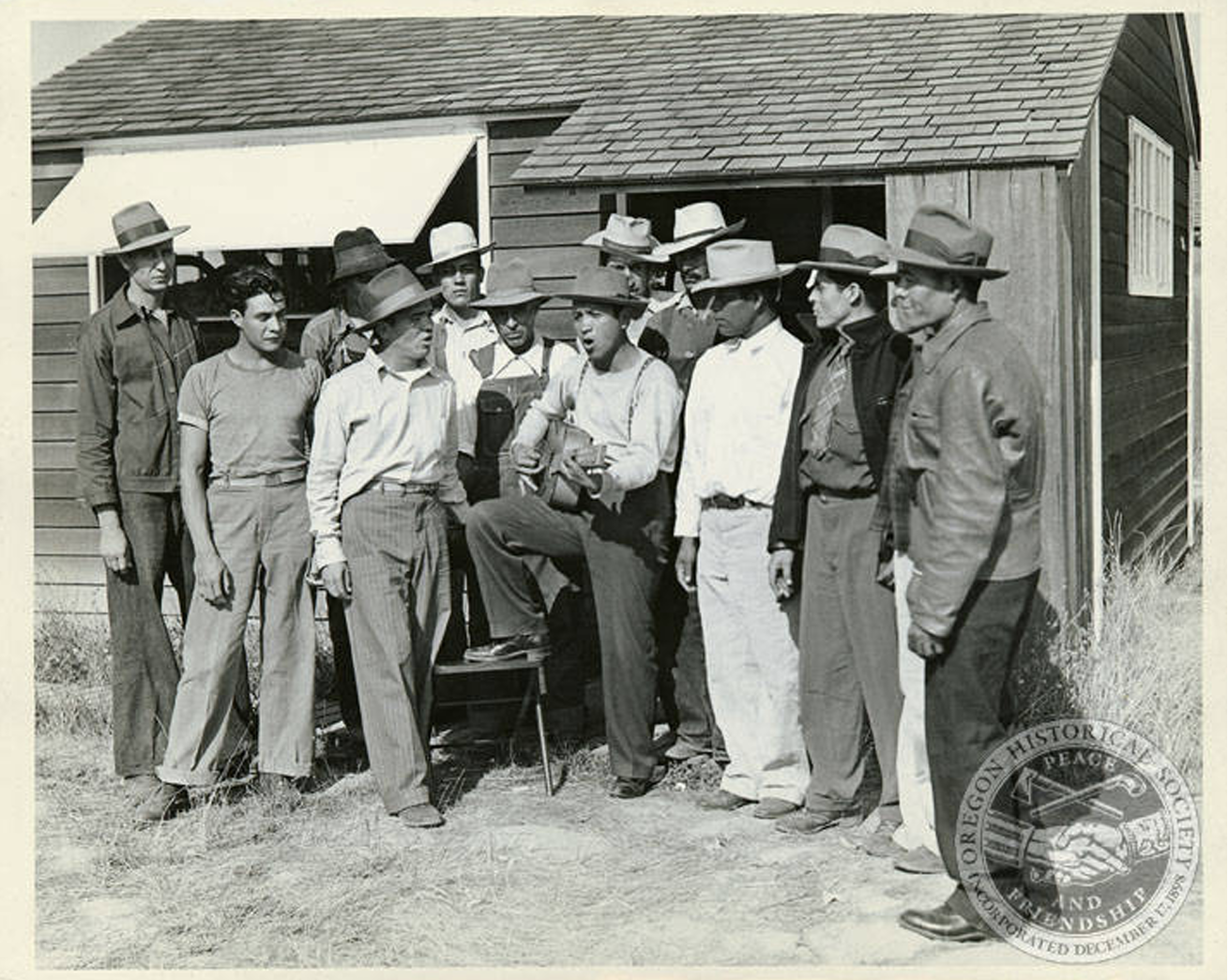
(Figure 3) Migrant workers celebrating Mexican Independence Day, September 1943
Political Activism and Civil Rights
By the 1960s the Chicano movement gained traction across the U.S. alongside the Civil Rights Movement (Guzman, 2006). As the Latino population in Washington grew, so did their political and social voice, and activist movements connected communities across the state, from Mexican American farm workers from the Yakima Valley to Latino students at the University of Washington in Seattle (Guzman, 2006). These groups advocated for workers' rights, educational opportunities, political representation, and greater recognition of Mexican American culture and identity. Through their activism, several important organizations emerged across Washington State, including the Mexican American Federation in 1967 and La Sociedad Mutualista in 1968 (Guzman, 2006). These organizations served as an important resource and gathering place for Latinos and Mexican Americans to promote political activism and strengthen community (Compean).
This activism continued into the 1970s and helped establish several Latino Civil Rights Organizations. El Centro de la Raza was founded in Seattle, Washington, in 1972 by Latino activists who were prompted to occupy the abandoned Beacon Hill School after the government cut funding to the Chicano: English and Adult Basic Education Program (El Centro de la Raza). The Beacon Hill School became the formal gathering place for El Centro de La Raza, representing not only Latino activism but also cross-racial solidarity and community in a time that was otherwise marked by division (El Centro de la Raza).
The Farm Workers Clinic was founded in Toppenish, Washington, in 1978 to provide healthcare to migrant farmworkers and remains one of the nation's largest Community Health Centers (Yakima Valley Farmworkers Clinic).
Various student activism groups at the University of Washington also developed in this period and continue to support the Latino community in Washington today (Guzman, 2006).
Conclusion
The impact and contributions of these groups to broader Latino empowerment and recognition cannot be overstated. These movements not only gave voice to generations of Latino laborers and immigrants who came before them, but also laid the foundation for the strength and resiliency of Latino communities in the PNW today. Washington State, in particular, serves as a powerful example of Latino heritage and the lasting importance of its history throughout the region. Latino communities have played a vital role in the development and flourishing of the Pacific Northwest; we must recognize their place in our shared history alongside other communities that have shaped this region, and the movements and institutions that continue to carry these voices forward today.
Every person and community has a story. Although this article only scratches the surface of the Latino history so deeply woven into this region, I hope it has provided an informative and interesting snapshot of Latino history in the PNW and Washington State. More importantly, I hope it serves as a reminder that there is always more than one story to be told, and the preservation of these stories is essential to keeping their history and legacy alive for generations to come. The story, however, does not end here. Latino communities throughout Washington continue to honor this history while building upon its legacy today. Stay tuned to learn more about the Latino community in Washington today and the people, organizations, and movements that continue to shape its story.
Works Cited
Compean, Mario. “Mexican Americans in the Columbia River Basin - Historical Overview.” Content.Libraries.Wsu.Edu, Washington State University, content.libraries.wsu.edu/digital/collection/cchm/custom/ma-overview.
El Centro de la Raza. “History & Evolution.” El Centro de La Raza, www.elcentrodelaraza.org/aboutus/history-evolution/.
Guzman, Gonzalo. “Latino History in Washington State.” Www.Historylink.Org, 27 Aug. 2006, www.historylink.org/File/7901.
“Hispanic, Latin@, Latinx or Latine? // Cambio Center.” Cambio.Missouri.Edu, University of Missouri, 2024, cambio.missouri.edu/about/hispanic-latin-latinx-or-latine/.
Library of Congress. “Research Guides: A Latinx Resource Guide: Civil Rights Cases and Events in the United States: 1942: Bracero Program.” Guides.Loc.Gov, Library of Congress, 2019, guides.loc.gov/latinx-civil-rights/bracero-program.
Mendoza, Mary E. “Mexican Farm Labor and the Agricultural Economy of the United States | Gilder Lehrman Institute of American History.” Gilderlehrman.Org, 2019, www.gilderlehrman.org/history-resources/essays/mexican-farm-labor-and-agricultural-ec onomy-united-states.
Migrant Workers Celebrating Mexican Independence Day, September 1943. WSU Libraries Digital Collections, content.libraries.wsu.edu/digital/collection/wsuvan1/id/1649/rec/1. Photograph.
Porter, Jayson Maurice. “Mule Power.” Science History Institute, 17 Oct. 2025, www.sciencehistory.org/stories/magazine/mule-power/.
Wilson Engstrand, Iris H., editor. “Document 26: Moziño Praises the Nuu-Chah-Nulth, 1792.” Center for the Study of the Pacific Northwest, University of Washington, 1970, www.washington.edu/uwired/outreach/cspn/Website/Classroom%20Materials/Curriculu m%20Packets/Indians%20&%20Europeans/Documents/26.html. ———. “MOZIÑO (Mociño, Mosiño) LOSADA SUÁREZ DE FIGUEROA, JOSÉ MARIANO.” Dictionary of Canadian Biography, University of Toronto/Université Laval, 2003, www.biographi.ca/en/bio/mozino_losada_suarez_de_figueroa_jose_mariano_5E.html#first.
Yakima Valley Farmworkers Clinic. “About.” Yakima Valley Farm Workers Clinic, www.yvfwc.com/about/.